Key Takeaways:
- On September 10, Teachers' Day, Chipierce officially launched its materials computing service brand Chipierce · SwiftMater, with its first service product focused on solid-state battery electrolytes.
- Services are delivered by a full-time, directly operated master's and PhD technical team, covering requirement understanding, solution design, computing execution, and result delivery, reducing layers of subcontracting and intermediaries.
- The computing foundation includes the APU compute-in-memory architecture and Hexi servers, combined with the Chipierce · MaterPlato agent, serving atomic-level scientific computing scenarios such as MLMD and DFT.
- Officials state that computing speed in relevant scenarios is improved by 1–3 orders of magnitude over general-purpose CPU/GPU, energy consumption is reduced by 1–2 orders of magnitude, and machine learning potential function training costs are about one-third of traditional solutions.
- The service features a three-tier quality control system and legally enforceable compensation guarantee; the first ten partner clients can join the co-creation partner program, with specific benefits subject to the service agreement signed by both parties.
September 10, Teacher’s Day.
Chipierce would like to take this occasion to talk about something related to “turning knowledge into productivity.”
Most people engaged in research and materials R&D are well aware of a reality: many projects get stuck on “can’t compute” and “can’t compute accurately.” Insufficient computing power, cumbersome workflows, and layer upon layer of outsourcing subcontracting — these things year after year drain energy that should be spent on thinking.
What Chipierce has been doing all along is using the AI4M (AI for Materials) approach to push materials R&D step by step from experimental trial-and-error toward scientific computing.
Today, Chipierce officially launches its materials computing service brand — Chipierce · SwiftMater.
PART 01
Who is Chipierce · SwiftMater?
Chipierce · SwiftMater is the materials computing service brand under Guangdong Chipierce Technology Co., Ltd., with a full-time, directly-operated team of master’s and doctoral technical experts who work directly with materials R&D institutions, university research groups, and corporate R&D teams.
Its key advantages:
01 Disintermediated, affordable:
Bypassing layers of subcontracting chains and eliminating intermediate markups. The same team handles everything “from the first mile to the last mile” — requirements understanding, solution design, computation execution, and result delivery are followed through end to end. Requirements and results won’t be distorted through handoffs, and an intermediate cost layer is eliminated.
02 Fast and accurate:
Behind this is the computing foundation built on Chipierce APU (Atomistic Processing Unit) and Hexi servers, along with the intelligent agent (Chipierce · MaterPlato).
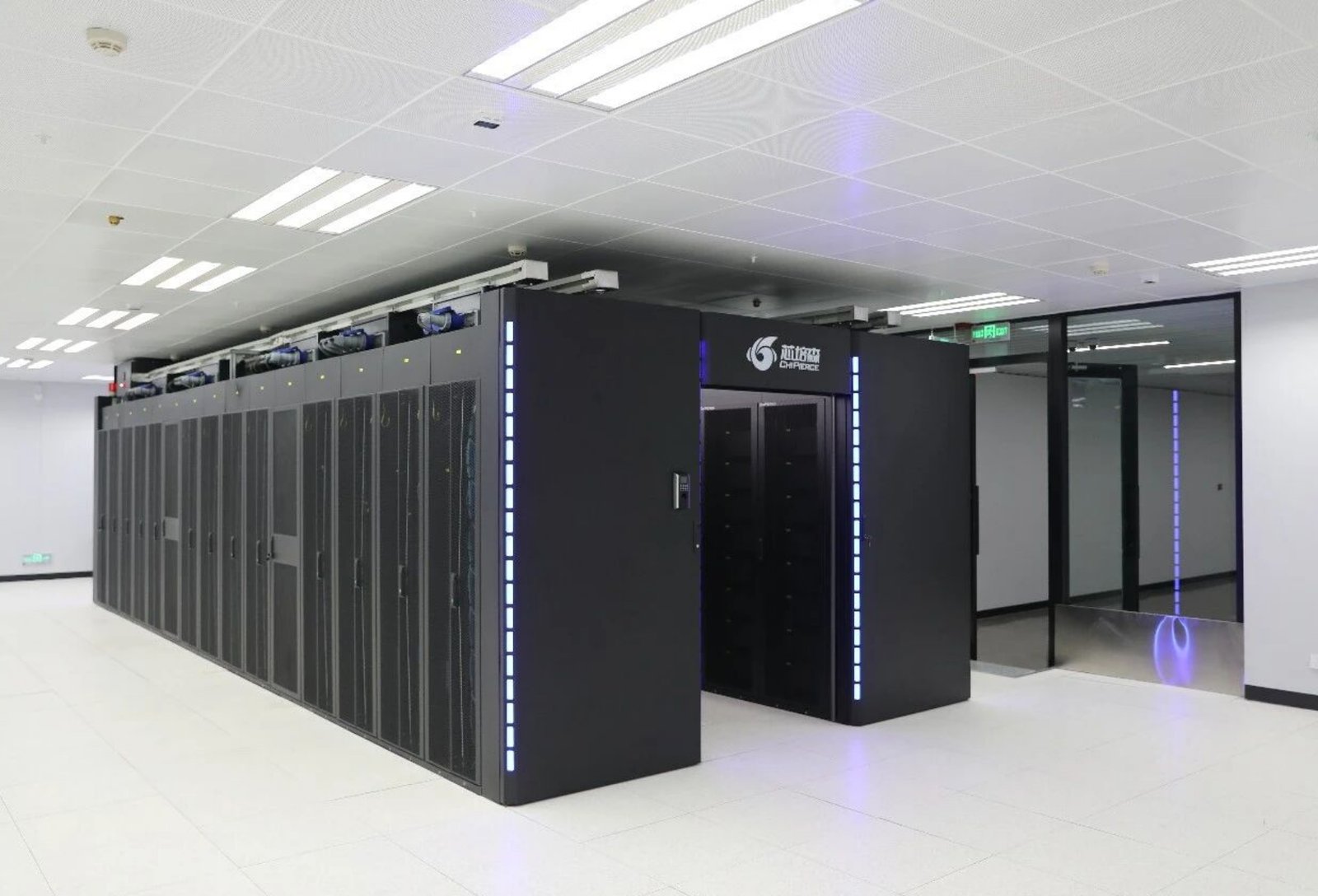
The APU adopts a proprietary “non-von Neumann” compute-in-memory architecture, allowing data to participate in computation right next to its storage location, directly breaking through the memory wall and power wall at the architectural level.
In atomic-level scientific computing scenarios such as machine learning molecular dynamics (MLMD) and density functional theory (DFT), computation speed is improved by 1–3 orders of magnitude compared to general-purpose CPU/GPU, energy consumption is reduced by 1–2 orders of magnitude; and machine learning potential function training costs only one-third of traditional solutions.
03 Quality control and assurance
A three-tier quality control system and legal-grade compensation guarantee run in parallel, with delivery standards enforced at every step: “on time, accurate, traceable.” For researchers, this provides a new path forward for large-system simulation projects previously shelved due to computing power constraints.
PART 02
The first service product:
Focused on the solid-state battery electrolyte direction
The first service product launched by the computing service (Chipierce · SwiftMater) focuses on the solid-state battery electrolyte direction.
It can serve materials R&D institutions, university research groups, doctoral researchers, and corporate R&D teams, providing computing or R&D service items, with core advantages or measured metrics relative to traditional solutions.
PART 03
Why solid-state battery electrolytes?
In the transition of the energy structure toward clean energy, solid-state batteries are one of the important technology routes for power batteries.
Solid-state electrolytes are the core of all-solid-state batteries. Their ionic conductivity, electrochemical window, and interfacial stability can directly determine battery safety, energy density, and cycle life.
Yet mainstream R&D is still dominated by “experimental trial-and-error + high-throughput experiments”: long trial-and-error cycles, high per-screening costs, and microscopic mechanisms that are difficult to explain quantitatively.
A candidate system often takes months or even years from proposal to completed validation.
Chipierce · SwiftMater Co-creation Partner Program
Chipierce wants to turn the first batch of users into “co-creation partners,” working together to refine the product to better fit real R&D scenarios.
Therefore, for the first ten partner clients of the computing service (Chipierce · SwiftMater), Chipierce has prepared special offers:
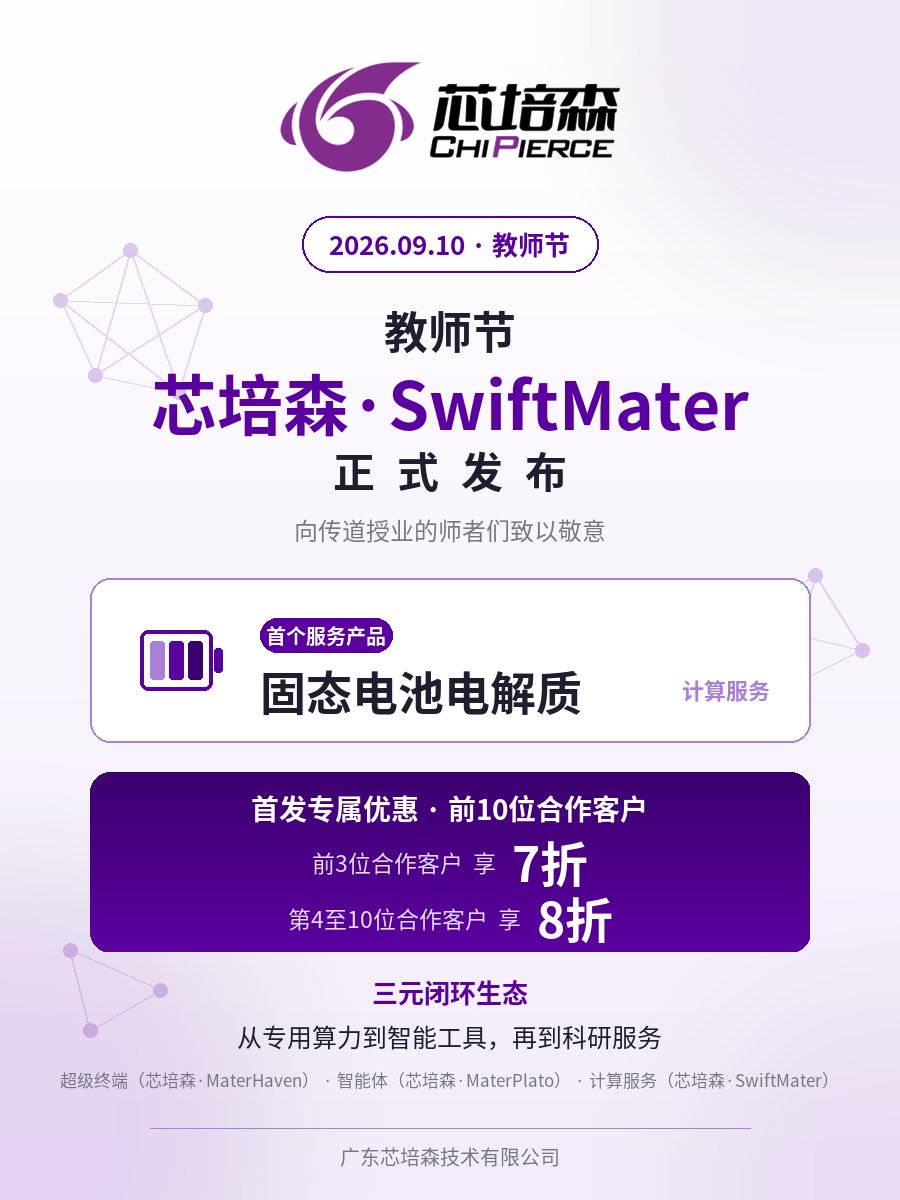
Specific terms are subject to the service agreement signed by both parties
If you have a genuine need, feel free to send a private message and leave your information
Chipierce will arrange for its technical team to connect with you directly
Chipierce · SwiftMater, officially launched today. And happy holidays to every teacher who guides, teaches, and enlightens on the path of research.